Immune Suppression
Immune Suppression
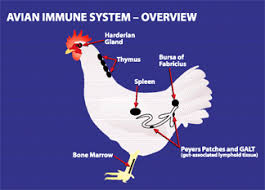
The immune system in chickens can be divided into primary immune organs and lymphoid tissues. The primary immune structures are the thymus gland, where T lymphocytes are produced and mature; the bursa of Fabricius, where B lymphocytes mature; and bone marrow, where blood cell precursors are produced.
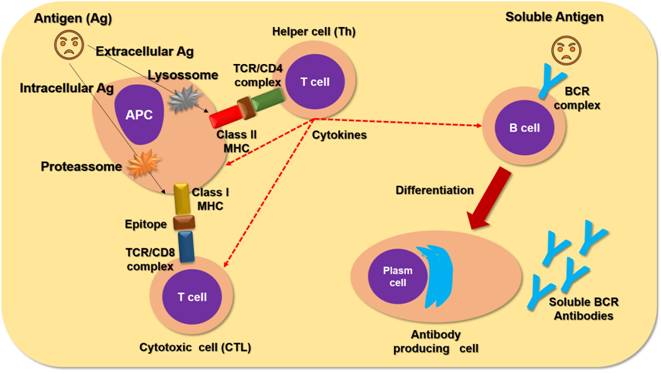
The immune system in chickens can be divided into primary immune organs and lymphoid tissues. The primary immune structures are the thymus gland, where T lymphocytes are produced and mature; the bursa of Fabricius, where B lymphocytes mature; and bone marrow, where blood cell precursors are produced.
Details
Organization of the Immune Organs in the Chicken
The immune system in chickens can be divided into primary immune organs and lymphoid tissue. The primary immune structures are the thymus, where T lymphocytes are produced and mature; the bursa of Fabricius, where B lymphocytes mature; and the bone marrow, where blood cell precursors are produced. In addition, during the embryonic development of chickens, the source of maternal antibodies is the yolk sac. Primary lymphoid organs mainly act as a center for the production and maturation of adaptive immune cells. Secondary lymphoid tissues specialize in controlling immune responses. They activate immune effector cells, such as lymphocytes (Boehm and Swann, 2014). After maturing in primary lymphoid organs, T and B lymphocytes re-enter the bloodstream and colonize secondary lymphoid tissues to facilitate antigen presentation to lymphoid cells and initiate and regulate the adaptive immune response.
The fundamental difference between the immune system in mammals and chickens is the lack of encapsulated lymph nodes. Instead, we find in them “diffuse” lymphoid tissue and its clusters in organizations such as Peyer patches, cecal tonsils, and Meckel’s diverticulum (Peralta et al., 2017). Lymphoid tissues include the spleen and mucosa-associated lymphoid tissues (MALT), also classified as the mucosal immune system (MIS). Lymphoid tissues in mucous membranes lining systems associated with nutrition (gut-associated lymphoid tissue—GALT), respiration (nasal-associated lymphoid tissue—NALT, bronchus-associated lymphoid tissue—BALT), and vision (conjunctiva-associated lymphoid tissue—CALT). In chickens, these tissues are immunologically well-developed and are the first line of defense against pathogens (McGhee and Fujihashi, 2012). In about 20-wk-old chickens, the primary immune organs, that is, the bursa and thymus, are involuted, and it is in the MIS that the humoral immune response occurs.
Chickens have 3 immunoglobulins (Ig) classes: IgA, IgM, and IgY. The chicken IgA and IgM are similar in structure to mammalian IgA and IgM. There are no analogs to mammalian IgE and IgD in chickens (Zhang et al., 2017). IgM is associated with the primary immune response in chickens, and its monomer is a B-cell receptor (Morgan, 2021).
SHAPING THE IMMUNE RESPONSE
Development of Acquired Immunity in Poultry Practice
Good poultry production practices must be conducted in such a way as to ensure safety not only with consumers but also with epizootic protection. Some unique elements of the structure of the immune system of birds (discussed in this review) allow the widespread use of vaccination techniques that are impossible or ineffective in the animal production of mammalian species. Such methods include the delivery of in ovo vaccination during embryonic development and early postnatal stimulation of antibody production through spray and drop vaccines (Peebles, 2018). This technology stimulates innate and adaptive immune response from Harder’s glands and local MALT (Mebrahtu et al., 2018). In addition, automatic whole-house vaccination by spraying can be used for both small- and large-scale poultry production. This is effective against poultry diseases such as Newcastle disease (NDV) and viral infectious bronchitis (IBV) (Mebrahtu et al., 2018; Purswell et al., 2019).
The Importance of Maternal Immune Status
The immune system is a complex that takes time to mature. This makes maternal antibodies critical for young bird health. To some extent, protection against potential pathogens is provided by maternal antibodies. In chickens, IgY transfer takes place via the yolk during in ovo nutrition (Brierley and Hemmings, 1956). In addition, it has recently been suggested that in chickens, there is a cross-generational influence of the maternal immune system on the specific antibody response in the next generation. An experiment was conducted to examine the effect of specific and nonspecific endotracheal (i.t.) immune activation of laying hens on the production of specific antibodies in the next generation. Two experimental designs were proposed in which laying dams received an intratracheal immune stimulus with human serum albumin (HuSA) or lipopolysaccharide (LPS). Maternal immune activation with LPS increased the offspring’s HuSA-specific IgY and IgM responses. It suggests a cross-generational influence of the maternal immune system on the specific antibody response in the next generation.
Moreover, maternal immune stimulation with LPS reduced anti-HuSA IgY responses after HuSA immunization in chicks fed a diet supplemented with β-glucan (known for its prebiotic properties). This suggests a cross-generational link between the maternal innate immune system and specific antibody responses in the offspring. These results may indicate maternal innate immune system activation influences immune-modulating dietary interventions and vaccination strategies in next-generation poultry (Verwoolde et al., 2022). Despite the lack of direct evidence in the cited experiment for the intergenerational transmission of epigenetic patterns, there are indications of their impact on the activity of genes related to the immunity of offspring.
Ways to Stimulate Innate Immunity in Poultry
Microorganisms associated with poultry production directly impact the immune status of animals, food safety, and public health. The chicken has already been extensively studied, and the effect of gut microbiota composition on the chicken’s performance and health has been demonstrated (Fathima et al., 2022). The composition of the intestinal microbiota of animals is shaped in the perinatal period. At this time, intensive intestinal development occurs (Iji et al., 2001). During this period, the chicks switch from utilizing the nutritional resources of the egg to being fed with starter feed, which brings several metabolic and physiological changes. This period coincides with the so-called hatching window (48–72 h) in the intensive poultry production system. During this time, chicks are at risk of delayed water and feed. An alternative to this system may be using a patio where the chickens receive water and feed. Chicks with a patio have increased body weight and immune organs, indicating advanced metabolism and physiological development, possibly due to early feeding (van de Ven et al., 2013). Reducing fasting after hatching chicks by providing feed and water promotes the development of intestinal microbiota (Proszkowiec-Weglarz et al., 2022).
Typical support for the development of the intestinal microbiota, and thus the immunological status of poultry, is the introduction of bioactive substances as an additive to feed/water or by in ovo injection. In recent years, many bioactive substances with immunomodulatory potential have been tested. Nevertheless, when discussing the effect of bedding, the combined supplementation system and adding bioactive substances to the litter material is worth mentioning. For example, aluminosilicates as a feed additive and litter have a positive local immunomodulating effect in GALT and are beneficial in broiler performance (Biesek et al., 2021b).
In shaping the immune response of chickens, it is essential to protect them against immunosuppression caused by stress factors. Factors that cause stress in poultry include temperature (high and low) and light management. The flashing light program is effective during heat stress to down-regulate inflammation markers such as corticosterone, TNF-α, and malondialdehyde (MDA) in blood plasma (Alaqil et al., 2022). The immune status of poultry is also affected by the color of the light-emitting diodes (LEDs) used in the poultry house. Initially, light blue light and then bright blue light stimulates the production of macrophages in broilers (Seo et al., 2016).
As the immune system takes time to mature in fast-growing chickens, there is a greater sensitivity to pathogens. Intensive growth and the use of feed to meet growth needs may be at the expense of the development of the immune system. A study on broilers showed low levels of cytokines in peripheral blood and intestinal mucosa between 6 and 13 d of age. Moreover, it was established that the immune system of broilers did not mature until 30 to 34 d of age (Song et al., 2021). In such a system, boosting immunity is especially important even by feed additives or water additives immunomodulators .